
Understanding Long-Tail Keywords and Their Role in SEO Strategy
Anyone who has ever worked on SEO has definitely heard the term long-tail keywords, but at the same time, the exact meaning and their real role in your strategy aren’t always crystal clear.
Long-tail keywords should be a core part of any SEO plan because they’re usually less competitive, giving fresh websites a genuine chance to rank faster. But new website owners often end up with a bunch of questions like:
- How do I actually use them?
- Do they always have low search volume?
- How many words should they have – three, five, or even more?
Don’t let yourself feel confused. This guide breaks down what long-tail keywords really are, why they matter, and how to smartly add them to your SEO strategy.
What Inspired the Name Long-tail Keywords?
Long tail keywords are highly specific multi-word search phrases that capture narrow user intent and typically have lower search volume but higher conversion potential. They are used in SEO to target precise queries and improve targeted visibility.
The story starts with the book “The Long Tail” by Chris Anderson. He explained how most of Amazon’s revenue didn’t come from a few best-selling books; it came from books having specific, detailed queries.
For Example:
people are not always typing “shoes”; they’re typing
“Women’s black running shoes under 2000 for flat feet.”
SEO works the same way.
Not all users search for broad, popular terms. A huge chunk of traffic comes from specific, detailed, niche search queries, the kind that may have low search volume but super-high intent
How Long-tail Keywords Work?
Imagine you run a cosmetic brand. Competing for broad terms like face wash or serums becomes nearly impossible, especially when you are just starting out. But the moment you shift your focus to long tail keywords such as “Herbal face wash for oily skin for women” or “serums with vitamin C for boys,” you step into a space where competition is lighter, and intent is stronger.
You may not attract millions of random visitors, but the people who do land on your site are already halfway convinced. They know exactly what they want, and your product fits that need perfectly. That is the real power of long tail keywords. They connect your business with the users who are not casually browsing but genuinely ready to take action.
Yes, they bring less traffic compared to broad terms, but they bring the right traffic. And the right traffic always converts better.
The 80/20 Rule of Long-tail Keywords
The 80-20 rule of long-tail keywords stems from the idea that most of your SEO results do not come from the broad, general terms everyone is chasing. They come from the smaller, specific searches that users type when they know exactly what they want. In simple words, twenty percent of your keywords often bring eighty percent of your qualified traffic. These long-tail searches may not look impressive in volume, but they drive intent-based visitors who are more likely to convert. This is why smart brands quietly prioritise them and enjoy steady, consistent growth without fighting in crowded spaces.
Role of Long-tail Keywords
Easier To Rank
Long tail keywords are easier to rank because fewer businesses target them. Big brands usually skip them since the search volume looks low and they focus on broad, high-competition terms. But if you’re a new website in the growth phase, this is exactly where you can win without entering a crowded battlefield.
For example, according to Ahrefs, “PlayStation” has 813,000 average monthly searches, while “PlayStation 5” jumps to 3,000,000 searches because the intent is clearer, and for “PlayStation 5 controller battery life,” average monthly searches are 30. Now imagine going even deeper into long-tail variations, competition drops significantly, and your chances of ranking shoot up.
This is why new websites should never underestimate low-volume, intent-rich keywords. They’re often your fastest route to visibility.
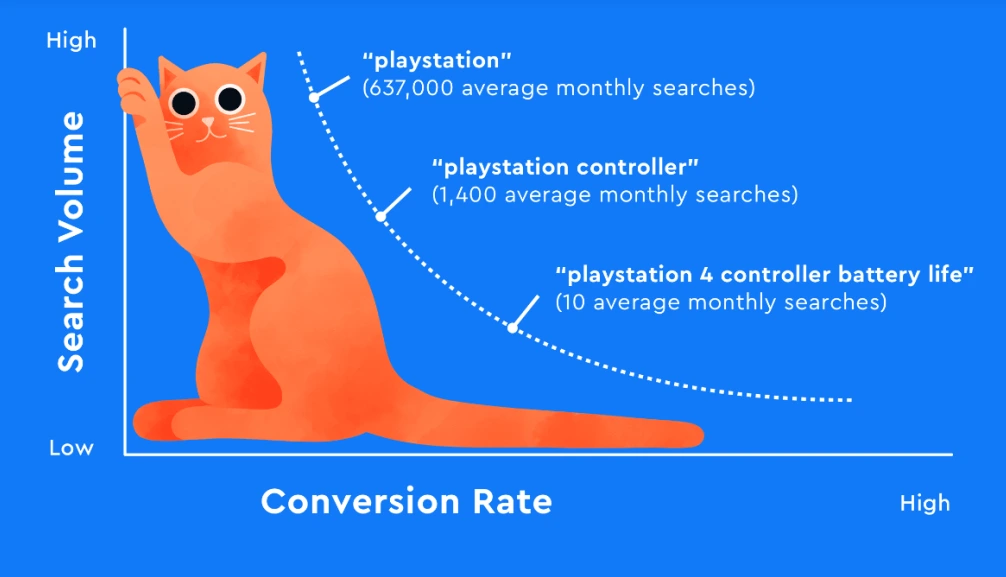
Check data from content
Higher Conversion Ratio
Imagine you have a dog who’s gluten-resistant. Now you search online for food recommendations. Are you more likely to click a page that says “best food for dogs” or one that says “best food for dogs who are gluten-resistant”?
Obviously, you’d choose the second one because it actually understands your needs.
That’s exactly how long tail keywords work. They speak directly to a user’s specific problem. So while they may bring in fewer people, the ones who do land on your page are highly motivated and far more likely to convert.
More Specific Search Intent
When someone types a long-tail keyword, they’re not casually browsing; they already know exactly what they want. Think of it like this: a person searching for “shoes” is just exploring, but someone typing “women’s black running shoes for flat feet” is ready to make a decision. Long-tail keywords capture this precise, high-intent audience.
Because the search intent is so specific, your content aligns more naturally with what the user is looking for. This means higher engagement, lower bounce rates, and a better chance of turning that visit into a sale or inquiry. In simple terms, long-tail keywords help you meet the right person at the right moment.
How To Figure Out Long-tail Keywords
Here are some common ways to figure out long-tail keywords for your site. And most importantly how you can determine which keyword works best as per your product or service
- GSC ( Google Search Console) Performance Report
If you are already using GSC for keyword optimization, there are chance that you are already ranking for good keywords. Now, to find the right long-tail keywords, use the RegEx Filter.
How To Use It?
- Go to your GSC Performance Report and open the Queries tab.
- Now apply a RegEx filter to pull out all long-tail terms in one go.
- Once you get the list, pick the keywords with good impressions but low positions and start optimizing them.
- Google Autocomplete
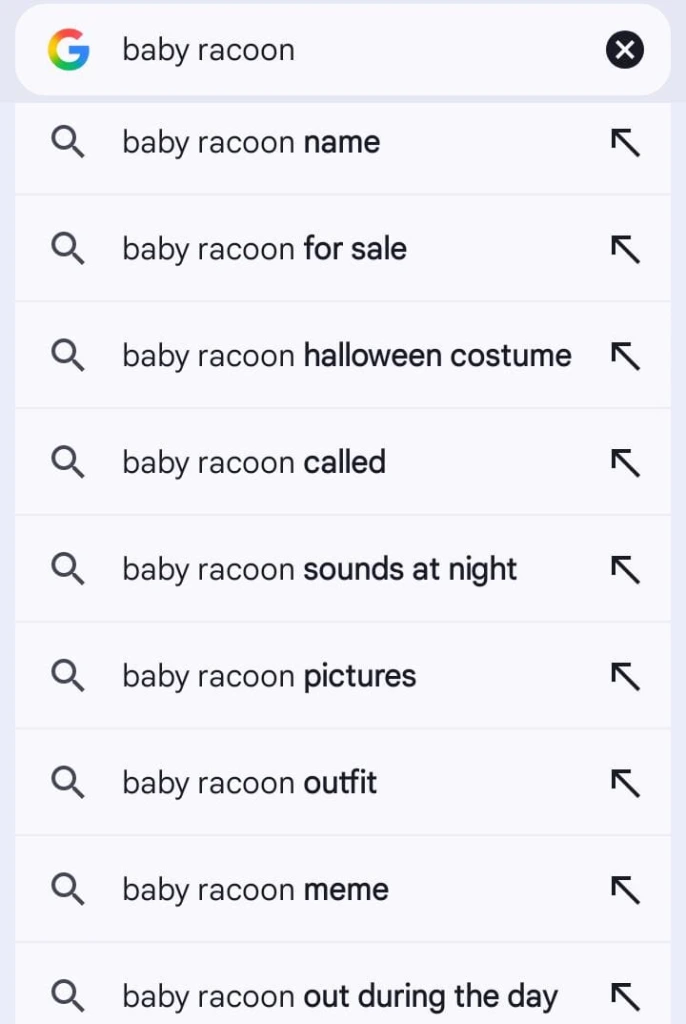
Google Autocomplete is one of the simplest ways to discover new long-tail keyword ideas you may not even know exist. Just head to the Google search bar and start typing a word related to your niche. Google instantly shows real user searches based on what people are actively typing every day.
For example, if you type “baby raccoon”, you’ll see suggestions like “baby raccoon Halloween costume”, “baby raccoon sounds at night”, “baby raccoon out during the day”, and “baby raccoon for sale.”
- Smarter Keyword Hunting With Planner & Bing Tools
When you run out of ideas, Google Keyword Planner and Bing Webmaster Tools step in as reliable, data-backed helpers. Keyword Planner gives you exact search volumes, competition levels, and new keyword variations you may never think of on your own. It’s especially useful for spotting long-tail opportunities with healthy intent.
On the other hand, Bing Webmaster Tools provides keyword insights, performance data, and query trends from a completely different search engine, giving you a broader view of how people search. Using both together helps you uncover more long-tail keywords, validate demand, and refine your SEO strategy with confidence.
- Google Trends
As the name indicates, this tool helps you uncover trends with long-tail keywords. Enter any keyword in this tool and check if the interest related to a particular keyword is on the rise or the fall.
As you scroll further, you’ll find related topics, breakout queries, and regional interest, all of which help you understand what people are actually searching for. This lets you pick long-tail keywords that are not just relevant but also growing in demand, making your SEO strategy more future-ready.
It’s Your Turn Now
Who would have thought long tail keywords had so much drama behind them rather than just being three to five-word phrases?
Turns out they carry real power. They bring you fewer people, but the right people. Now it is your turn to try them out and see what they can do for your site. Start exploring these search gems and let them shape your SEO plan the smart way. And if you feel stuck or want someone to brainstorm with, the SEOBookLab team is right here to help you tap into the right tools and strategies